
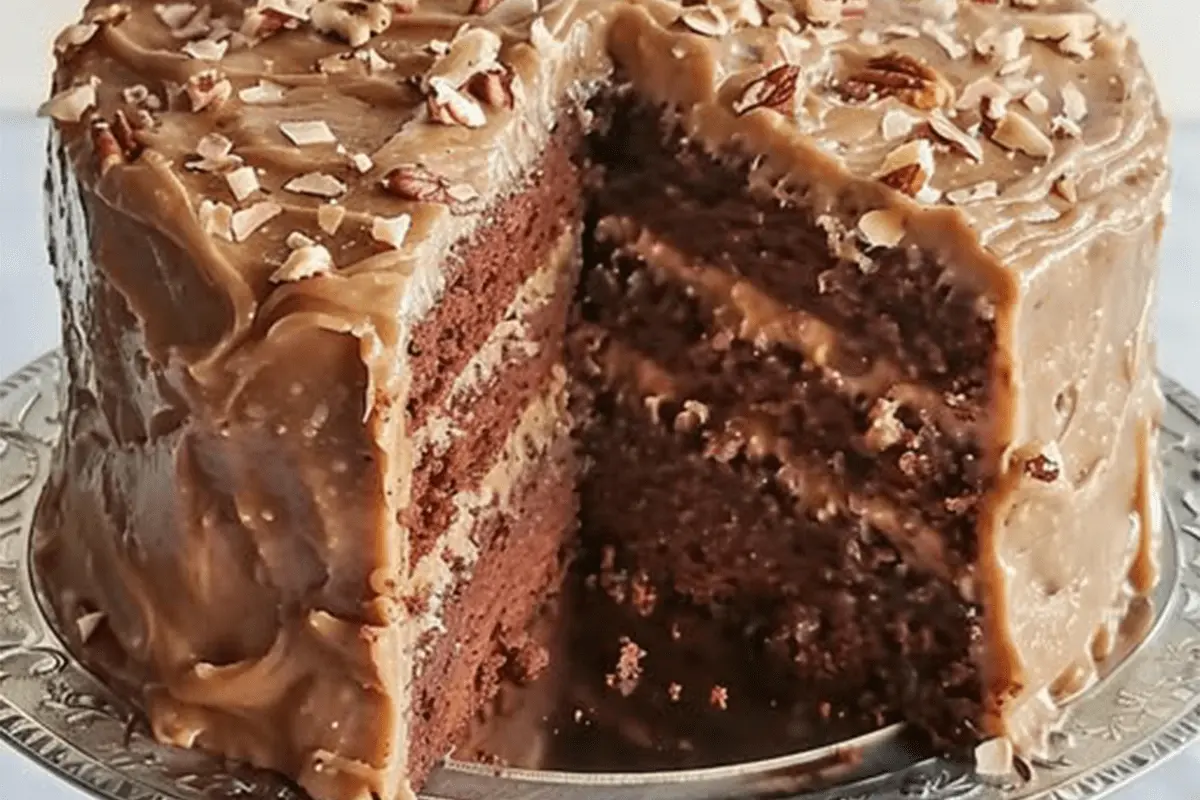
The Classic German Chocolate Cake is a masterpiece of flavor and texture, adored for generations for its rich chocolate layers and a signature coconut-pecan filling that makes it utterly irresistible. Despite its name, this cake is not actually German by origin but rather named after an English-American baker, Samuel German, who developed a type of dark-baking chocolate for the Baker’s Chocolate Company. This luscious dessert became widely popular in the United States in the mid-20th century and has since become a staple at birthdays, holidays, and special occasions.
What sets the German Chocolate Cake apart from other chocolate cakes is its distinctive filling and frosting: a luxuriously gooey, sweetened combination of coconut and chopped pecans, spread generously between and over moist layers of chocolate cake. Unlike buttercream or ganache, this frosting is cooked and brings a delightful caramel-like chewiness. The combination of the dense chocolate cake and the nutty, sweet coconut frosting creates a harmony of flavors and textures that is unmatched.
In this recipe, you’ll find the classic approach to crafting this elegant dessert, along with useful tips, variations, and nutritional insights to help you master it in your own kitchen.
Ingredients
For the Chocolate Cake:
-
1 package (4 oz) sweet baking chocolate (like Baker’s German’s Sweet Chocolate), chopped
-
½ cup (1 stick) unsalted butter, softened
-
1 ¼ cups granulated sugar
-
3 large eggs, separated
-
1 tsp pure vanilla extract
-
2 ½ cups all-purpose flour
-
1 tsp baking soda
-
½ tsp salt
-
1 cup buttermilk, at room temperature
-
½ cup water
For the Coconut-Pecan Frosting:
-
1 cup evaporated milk
-
1 cup granulated sugar
-
3 large egg yolks, lightly beaten
-
½ cup (1 stick) unsalted butter
-
1 tsp pure vanilla extract
-
1 ½ cups sweetened shredded coconut
-
1 cup chopped pecans
Preparation
Step 1: Preheat and Prepare Pans
Preheat your oven to 350°F (175°C). Grease and flour three 9-inch round cake pans. You can also line the bottoms with parchment paper for easier release.
Step 2: Melt the Chocolate
In a small saucepan over low heat, melt the sweet baking chocolate with ½ cup water, stirring constantly until smooth. Let it cool to room temperature.
Step 3: Cream Butter and Sugar
In a large mixing bowl, cream together the butter and sugar until light and fluffy, about 3–5 minutes using an electric mixer.
Step 4: Add Egg Yolks and Vanilla
Beat in the egg yolks one at a time, mixing well after each addition. Stir in the melted chocolate and vanilla extract until fully incorporated.
Step 5: Combine Dry Ingredients
In a separate bowl, whisk together the flour, baking soda, and salt. Add the dry ingredients to the chocolate mixture alternately with the buttermilk, beginning and ending with the flour mixture. Mix until smooth.
Step 6: Beat Egg Whites
In a clean mixing bowl, beat the egg whites until stiff peaks form. Gently fold them into the batter to add airiness and volume.
Step 7: Bake the Cakes
Divide the batter evenly among the prepared pans. Bake for 25–30 minutes or until a toothpick inserted into the center comes out clean. Cool the cakes in the pans for 10 minutes, then turn out onto wire racks to cool completely.
Step 8: Make the Coconut-Pecan Frosting
In a medium saucepan, combine evaporated milk, sugar, egg yolks, and butter. Cook over medium heat, stirring constantly for about 10–12 minutes, until the mixture is thick and golden brown. Remove from heat and stir in vanilla, shredded coconut, and chopped pecans. Let the frosting cool to room temperature; it will thicken further as it cools.
Step 9: Assemble the Cake
Place one cake layer on a serving plate. Spread ⅓ of the coconut-pecan frosting over the top. Repeat with the remaining layers, spreading the frosting between the layers and on the top. The sides of a German chocolate cake are traditionally left unfrosted.
Variations
-
Chocolate Ganache Drip: Add a rich chocolate ganache between the layers or drizzle it over the top for a more decadent twist.
-
Cupcake Version: Make cupcakes instead of a layered cake and top each with a spoonful of the coconut-pecan frosting.
-
Nut-Free: If you’re allergic to pecans, substitute with chopped sunflower seeds or simply omit the nuts.
-
Vegan Option: Use plant-based butter, egg replacers, and coconut milk to make a vegan-friendly version.
Cooking Note
-
Stir the frosting mixture constantly while cooking to prevent curdling or burning.
-
Don’t overbake the cake layers — chocolate cake dries out quickly.
-
The cake layers can be baked a day in advance and kept wrapped tightly in plastic wrap.
Serving Suggestions
-
Serve each slice with a scoop of vanilla ice cream for an extra indulgent treat.
-
Add fresh berries or a raspberry coulis for a tart contrast to the sweetness.
-
Pair with a cup of rich coffee or espresso to balance the flavors.
Tips
-
Use room temperature ingredients for smoother batter and more even baking.
-
For a stronger chocolate flavor, add 1 tablespoon of cocoa powder to the dry ingredients.
-
Toast the coconut and pecans lightly before adding them to the frosting for an extra nutty aroma.
-
If you’re short on time, you can make the frosting a day ahead and refrigerate. Bring it to room temperature before using.
Prep Time:
30 minutes
Cooking Time:
30 minutes
Total Time:
1 hour (plus cooling and assembling)
Nutritional Information (per serving, based on 12 servings):
-
Calories: 680
-
Protein: 6g
-
Sodium: 280mg
(Note: Nutritional values are approximate and may vary based on ingredients and serving size.)
FAQs
Q: Why is it called “German” chocolate cake?
A: It’s named after Samuel German, who created the type of sweet chocolate used in the original recipe—not the country.
Q: Can I freeze German chocolate cake?
A: Yes. Wrap the cake tightly in plastic and foil and freeze for up to 3 months. Thaw overnight in the refrigerator before serving.
Q: Can I use regular cocoa powder instead of German’s sweet chocolate?
A: Not directly. You’ll need to adjust for sweetness and fat content. It’s best to stick with the original sweet baking chocolate if possible.
Q: Why do you beat the egg whites separately?
A: Beating egg whites adds volume and lightness to the batter, which helps balance the density of the rich cake.
Conclusion
The Classic German Chocolate Cake is more than just a dessert—it’s a celebration of rich textures and sweet, comforting flavors. Whether you’re honoring tradition or discovering it for the first time, this cake brings joy to any table. From its moist, tender chocolate layers to the iconic coconut-pecan frosting, every bite is a harmonious blend of indulgence and nostalgia. Once you master this recipe, it will surely become a cherished favorite for every special occasion—or simply whenever you crave something extraordinary.
Print
Classic German Chocolate Cake
- Total Time: 1 hour (plus cooling and assembling)
Ingredients
Ingredients
For the Chocolate Cake:
-
1 package (4 oz) sweet baking chocolate (like Baker’s German’s Sweet Chocolate), chopped
-
½ cup (1 stick) unsalted butter, softened
-
1 ¼ cups granulated sugar
-
3 large eggs, separated
-
1 tsp pure vanilla extract
-
2 ½ cups all-purpose flour
-
1 tsp baking soda
-
½ tsp salt
-
1 cup buttermilk, at room temperature
-
½ cup water
For the Coconut-Pecan Frosting:
-
1 cup evaporated milk
-
1 cup granulated sugar
-
3 large egg yolks, lightly beaten
-
½ cup (1 stick) unsalted butter
-
1 tsp pure vanilla extract
-
1 ½ cups sweetened shredded coconut
-
1 cup chopped pecans
Instructions
Preheat your oven to 350°F (175°C). Grease and flour three 9-inch round cake pans. You can also line the bottoms with parchment paper for easier release.
In a small saucepan over low heat, melt the sweet baking chocolate with ½ cup water, stirring constantly until smooth. Let it cool to room temperature.
In a large mixing bowl, cream together the butter and sugar until light and fluffy, about 3–5 minutes using an electric mixer.
Beat in the egg yolks one at a time, mixing well after each addition. Stir in the melted chocolate and vanilla extract until fully incorporated.
In a separate bowl, whisk together the flour, baking soda, and salt. Add the dry ingredients to the chocolate mixture alternately with the buttermilk, beginning and ending with the flour mixture. Mix until smooth.
In a clean mixing bowl, beat the egg whites until stiff peaks form. Gently fold them into the batter to add airiness and volume.
Divide the batter evenly among the prepared pans. Bake for 25–30 minutes or until a toothpick inserted into the center comes out clean. Cool the cakes in the pans for 10 minutes, then turn out onto wire racks to cool completely.
In a medium saucepan, combine evaporated milk, sugar, egg yolks, and butter. Cook over medium heat, stirring constantly for about 10–12 minutes, until the mixture is thick and golden brown. Remove from heat and stir in vanilla, shredded coconut, and chopped pecans. Let the frosting cool to room temperature; it will thicken further as it cools.
Place one cake layer on a serving plate. Spread ⅓ of the coconut-pecan frosting over the top. Repeat with the remaining layers, spreading the frosting between the layers and on the top. The sides of a German chocolate cake are traditionally left unfrosted.
- Prep Time: 30 minutes
- Cook Time: 30 minutes
Nutrition
- Calories: 680
- Sodium: 280mg
- Protein: 6g